
Is it safe to walk around San Pedro de Atacama?
Quick answer
Yes. San Pedro is a small tourism town where the ordinary precautions of any busy destination are enough. The real risks in the Atacama are environmental — altitude, sun, dehydration and cold — and they are the ones worth preparing for.
People asking this question are usually asking about crime, and that is not where the danger is in this part of Chile. What sends visitors to the clinic in San Pedro is altitude sickness, sunburn and dehydration, roughly in that order, and all three are avoidable with planning rather than vigilance.
Walking around town
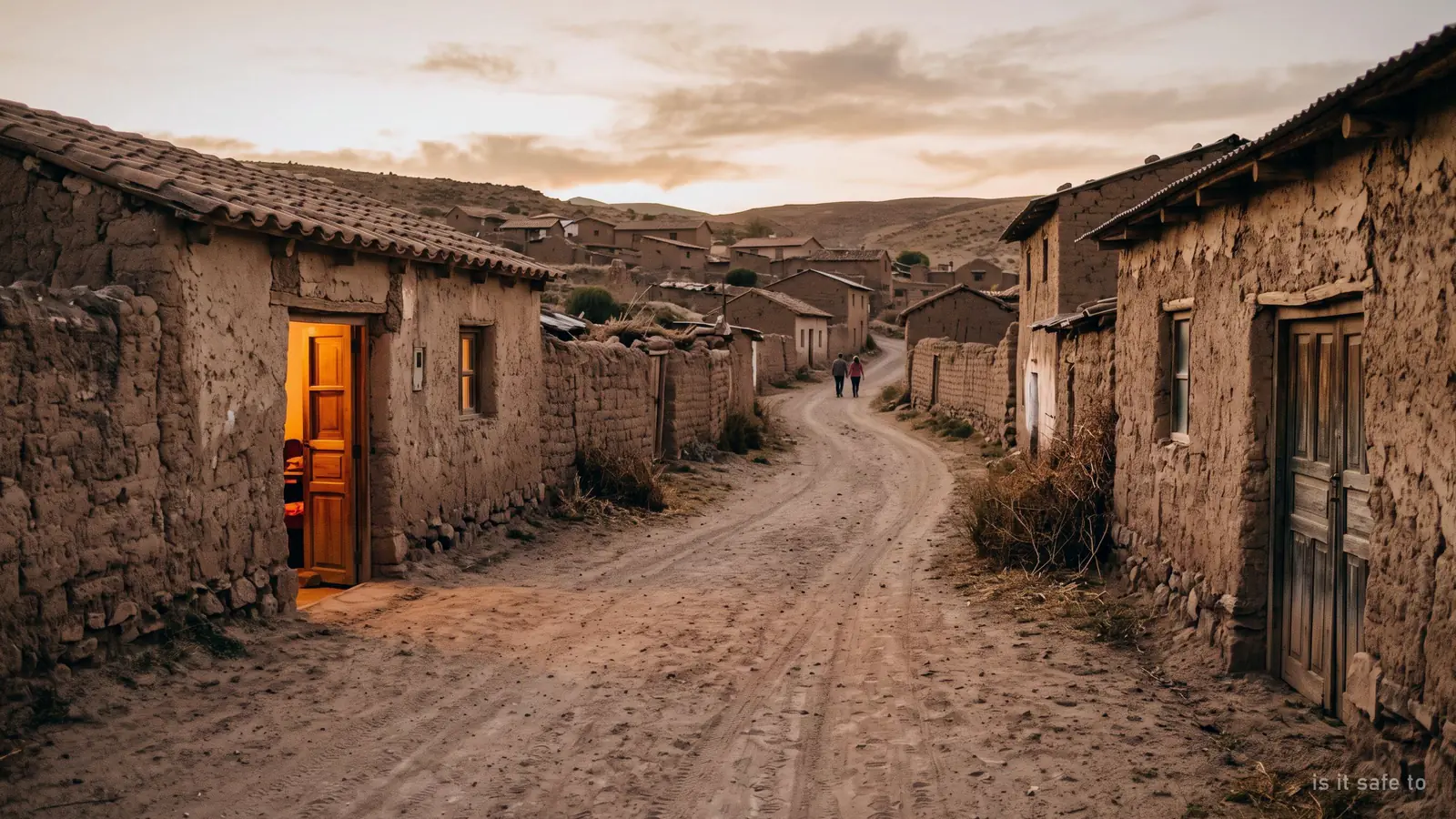
San Pedro is small, low-rise and busy with visitors into the evening. The usual sense applies — keep an eye on your bag in crowded places, do not leave valuables visible — and beyond that it is unremarkable. The streets are unlit and unpaved in places, so a torch is more use than caution.
The thing that actually causes trouble
Altitude. The town is at 2,407 m and the excursions go to 4,320 m. Operators publish exclusion lists for the high tours precisely because it makes people ill. The order you book your days in is the single biggest safety decision you will make here, and it is covered in full on the altitude page.
Sun and dehydration
There is no shade and very little atmosphere between you and the sun. Humidity runs from 13 to 38 per cent, so you lose water breathing without feeling thirsty. Sunburn and dehydration here happen at temperatures that do not feel hot, which is exactly why they catch people.
Cold, which nobody expects
The daily swing is about 20 °C in every month of the year, and El Tatio is −10 to −5 °C at dawn whatever the season. Being under-dressed on a pre-dawn tour at 4,320 m is a genuine problem, not a discomfort.
The roads
Excursions mean long drives on gravel at altitude, often starting before dawn. Operators are licensed and the vehicles are generally sound, but these are real mountain roads. Book operators with review histories rather than the cheapest board on the street.
The geothermal field
El Tatio has thin crust over boiling water, and the burns that happen there happen to people who stepped off the marked ground for a photograph. Stay on the paths. This is the one genuinely dangerous place in the region.
Money, and the ATM problem
The practical annoyance rather than a danger, but it catches people. San Pedro's cash machines run out, particularly in January and February, and every entrance fee outside the town is Chilean pesos in cash. Draw what you need for the week in Calama on the way in. Carrying several days of cash is fine here; losing a day of excursions because there is no money in the town is the more likely problem.
Solo travel
San Pedro is a well-travelled backpacker town and solo visitors are unremarkable. Excursions are shared vans with a guide, so you are not alone on any of them. The thing that genuinely favours company is altitude: if you feel unwell at 4,320 m at six in the morning, someone noticing is useful.
Insurance, and why it is not optional here
Ordinary travel insurance is worth having anywhere. It is worth more here, because the nearest hospital is in Calama, a hundred kilometres away, and several of the excursions put you two to three hours from the nearest road with a phone signal. Check that your policy covers activities above 4,000 m — some exclude altitude, and every good day out in this region breaches that line.
Frequently asked questions
Is San Pedro de Atacama dangerous?
Not in the way people usually mean. It is a small tourism town and ordinary precautions suffice. The risks that actually materialise are altitude, sun and cold.
Is it safe at night?
Yes, though the streets are unlit and unpaved in places. A torch is useful.
What is the most dangerous part of a visit?
The geothermal field at El Tatio, where the crust is thin over boiling water. Stay on the marked ground.